Collagen Supplements: What You Need to Know Before You Buy
You've been taking collagen for six months. Your bathroom shelf is lined with half-empty tubs of powder—some vanilla-flavored, some "unflavored" (which somehow still taste like gym socks). You've mixed it into your coffee, your smoothies, even you...

D.C.
Doctor of Chiropractic (D.C.)
Founder of FormulaForge. Doctor of Chiropractic revolutionizing nutritional supplements to be what we all wish they were — real quality, scientifically validated, with the exact ingredients and dosages we choose.
View Full ProfileReviewed by Dr. Brennan Commerford, DC
Collagen is now the top-selling supplement category globally — yet most products are poorly absorbed, mislabeled by type, or use marine sources when bovine would serve the patient better. This guide covers the five collagen types that matter clinically, explains what hydrolyzed actually means, separates the research that holds up from the marketing that does not, and identifies who genuinely benefits from supplementation versus who is wasting money.
The Collagen Confusion Problem
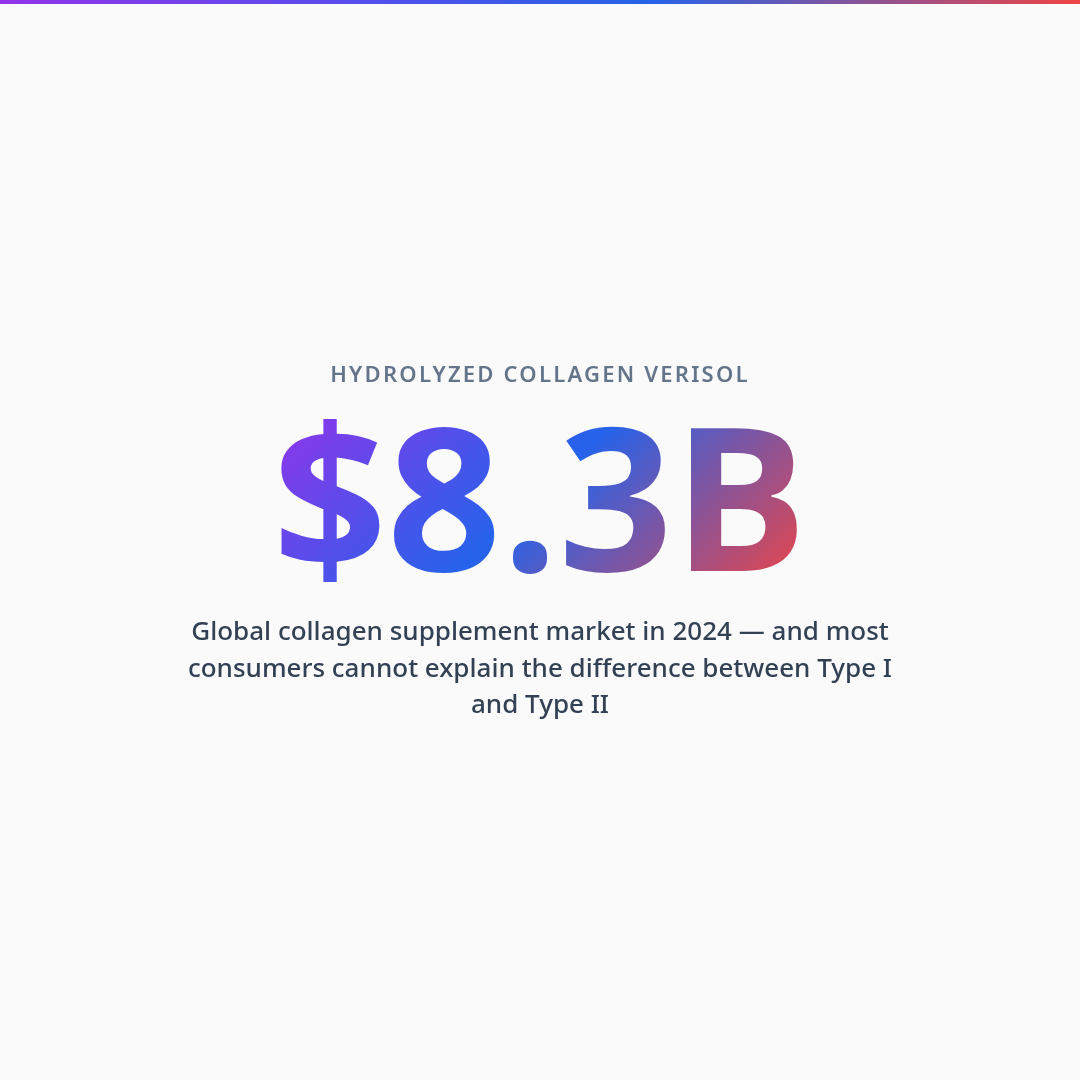
In clinical practice, I noticed that collagen questions had become among the most frequent I fielded from patients — and the most difficult to answer honestly. The marketing around collagen supplements is louder than the science. Products make claims about joint pain, skin elasticity, gut healing, and athletic performance with varying degrees of evidence behind each one. Meanwhile, patients are spending $40 to $80 a month on products they do not fully understand.
The honest position is this: collagen supplementation has genuine evidence behind specific applications, and that evidence depends heavily on which type you are taking, how it was processed, and what you are trying to accomplish. A Type II collagen product for joint support and a Type I hydrolyzed peptide product for skin health are fundamentally different interventions with different evidence profiles. The word "collagen" on the label tells you almost nothing useful.
This guide cuts through the noise. We will cover the five clinically relevant collagen types, what hydrolyzed means and why it matters, the marine versus bovine question, what the research actually supports, and who is most likely to benefit.
Collagen is the most abundant protein in the human body, making up approximately 30% of total protein content. It forms the structural scaffolding of skin, tendons, ligaments, cartilage, bone, and blood vessel walls. After age 25, the body produces roughly 1% less collagen per year — a fact often cited in supplement marketing, though whether oral collagen meaningfully reverses this decline is more nuanced than that statistic implies.
The Five Types That Matter Clinically
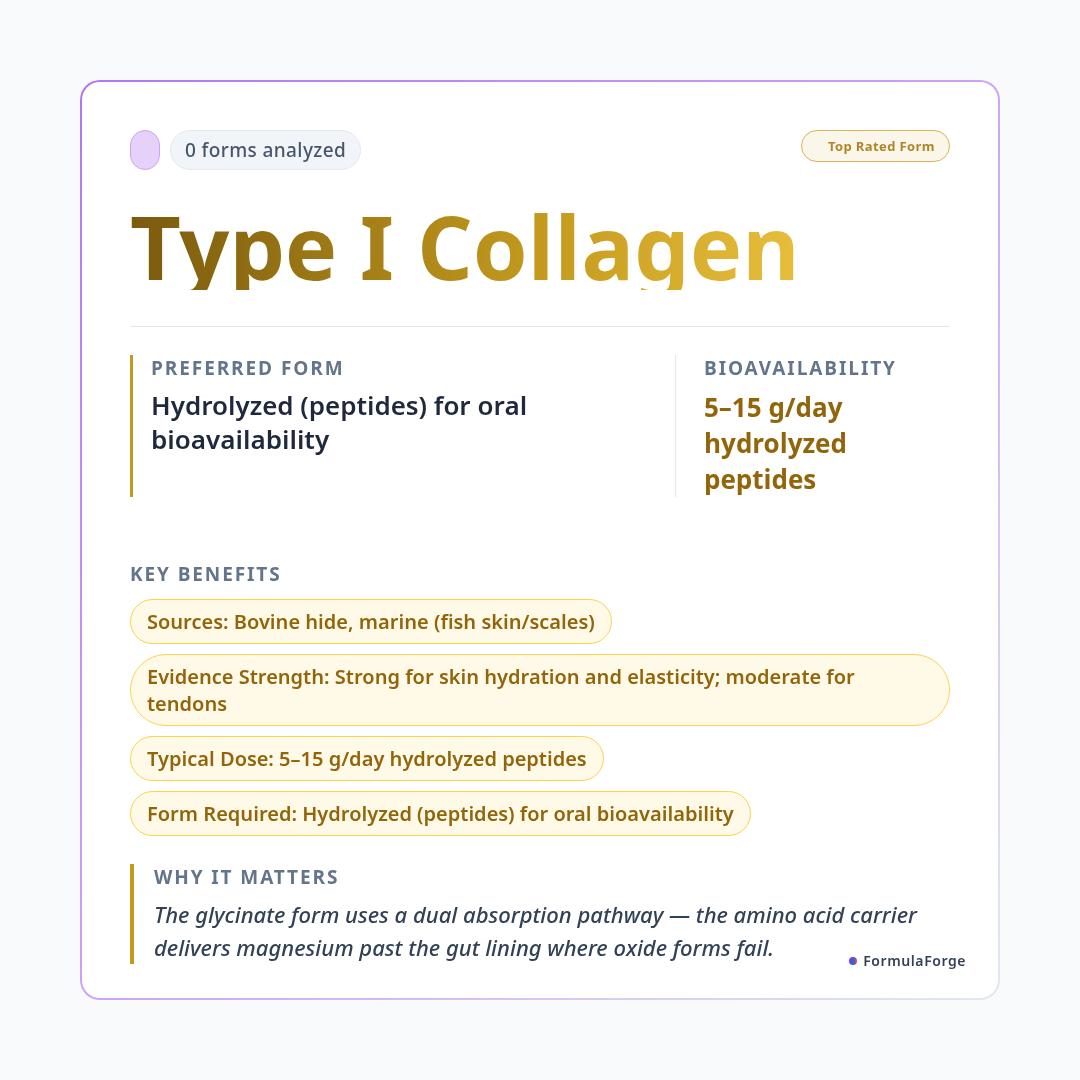
There are at least 28 known collagen types, but the clinical and research literature focuses primarily on five. Understanding which type addresses which tissue is the first step to making an intelligent purchase decision.
Type I is the most abundant collagen in the body and the most studied in supplement form. It constitutes the primary structural protein of skin, tendons, ligaments, and the organic matrix of bone. The majority of collagen supplement research — including the robust skin hydration and wrinkle reduction trials — was conducted on hydrolyzed Type I peptides derived from bovine or marine sources.
Type II collagen is the structural protein of articular cartilage — the tissue that cushions joints. This is the form relevant to osteoarthritis, joint pain, and athletic joint support. Critically, Type II collagen can work through two completely different mechanisms depending on how it is processed: undenatured Type II (UC-II) works via oral tolerization — the immune system recognizes it and reduces the inflammatory response targeting cartilage — while hydrolyzed Type II provides amino acid building blocks for cartilage synthesis. These are not interchangeable, and the dose differs dramatically: 40 mg of UC-II versus 10 grams of hydrolyzed Type II.
Type III is a reticular collagen found alongside Type I in skin, the gut lining, blood vessel walls, and internal organs. It is less studied independently, but bovine hide-derived collagen naturally contains a significant proportion of Type III alongside Type I. Products marketed as "gut health" collagen often lean on Type III, though the direct intestinal permeability evidence in humans remains preliminary.
What "Hydrolyzed" Actually Means
The term "hydrolyzed collagen" or "collagen peptides" appears on virtually every collagen supplement, yet most consumers do not know what it means — or why it matters for absorption.
Collagen in its native form is an enormous protein molecule — too large to be absorbed intact through the intestinal wall. Hydrolysis is the enzymatic or acidic process that breaks collagen down into short peptide chains, typically 2–10 amino acids long. These smaller peptide fragments, particularly the dipeptide hydroxyproline-proline and tripeptide hydroxyproline-proline-glycine, are absorbed through intestinal transporters and appear in the bloodstream within 60 minutes of ingestion in clinical studies using isotope labeling.
A 2019 systematic review in the Journal of Drugs in Dermatology analyzed 11 randomized controlled trials of oral collagen supplementation for skin outcomes. The majority demonstrated significant improvements in skin hydration, elasticity, and wrinkle reduction compared to placebo after 4–12 weeks of use with hydrolyzed collagen peptides at 2.5–10 g/day. The reviewers noted that the peptide size and source varied between studies, making dose optimization conclusions preliminary — but the directional evidence for skin outcomes is consistent.
The key distinction is between hydrolyzed (peptides) and gelatin. Gelatin is partially denatured collagen — it gels when cooled, dissolves in hot water, and while it contains the same amino acids as hydrolyzed collagen, the molecular weight is higher and absorption is less predictable. Bone broth, despite its popularity, is a gelatin-based collagen source, not a hydrolyzed peptide source. The evidence base for hydrolyzed peptides does not transfer directly to bone broth.
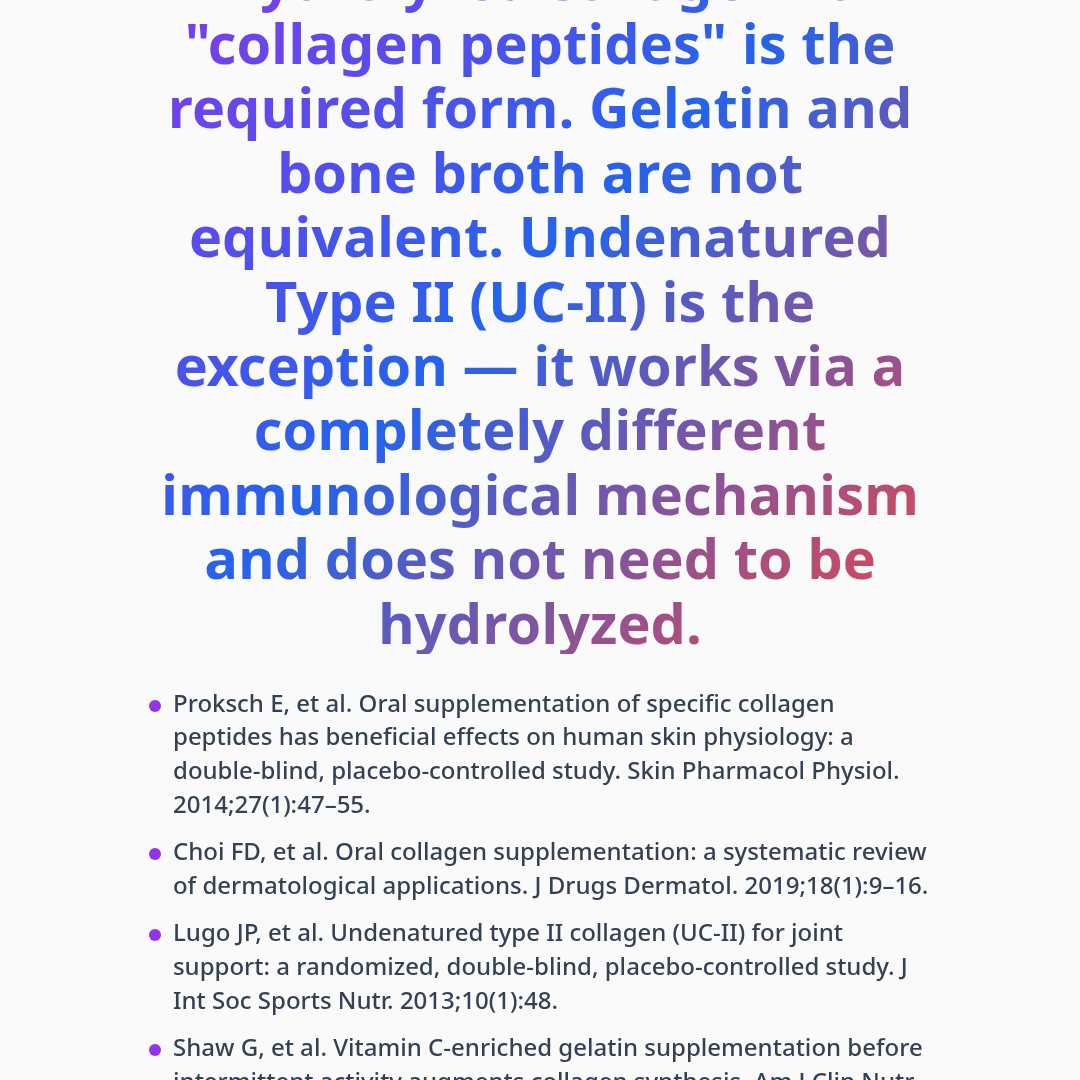
For oral supplementation, "hydrolyzed collagen" or "collagen peptides" is the required form. Gelatin and bone broth are not equivalent. Undenatured Type II (UC-II) is the exception — it works via a completely different immunological mechanism and does not need to be hydrolyzed.
Marine vs. Bovine: The Source Question
Most collagen supplements use one of two primary source materials: marine (fish skin, scales, or bones) or bovine (cattle hide). Porcine (pork) and chicken sources also exist but are less dominant in the consumer market. Each source has genuine differences that matter for specific applications.
For patients primarily focused on skin outcomes, marine collagen is a defensible choice — the smaller peptide size and high Type I concentration align well with the evidence base. For patients who want broader coverage (skin, gut lining, and joint support), bovine provides the Type I/III combination. Neither is inherently superior; the application drives the choice.
What the Research Actually Supports
Multiple RCTs with consistent outcomes. A 2014 study in Skin Pharmacology and Physiology showed 20% improvement in skin elasticity after 8 weeks of 2.5 g/day. A 2021 meta-analysis of 19 trials confirmed significant improvements in skin hydration and elasticity. Type I peptides at 2.5–10 g/day for minimum 8 weeks.
UC-II (undenatured Type II, 40 mg/day) has multiple RCTs demonstrating has been studied for its role in supporting joint comfort and mobility. Hydrolyzed Type II at 10 g/day also showed has been studied for supporting joint comfort during physical activity. Second-strongest evidence base after skin outcomes.
Preclinical data and theoretical mechanisms exist. Collagen provides glycine and hydroxyproline important for gut lining integrity. Clinical human trials on intestinal permeability markers are limited and methodologically mixed. Active research area but not yet evidence-based the way skin outcomes are.
Collagen is not a complete protein — it lacks tryptophan and is low in leucine, making it inferior for muscle protein synthesis compared to whey. Collagen may support body composition in older adults via tendon and connective tissue benefits. Athletes seeking muscle-building protein should prioritize leucine-rich sources first.
Vitamin C is a required co-factor for collagen synthesis. The enzyme prolyl hydroxylase, which cross-links collagen fibers, is Vitamin C-dependent. The Shaw et al. 2017 study in the American Journal of Clinical Nutrition demonstrated that taking collagen with 50–150 mg of Vitamin C improved collagen synthesis markers, particularly for tendon and connective tissue applications.
Evidence-Based Dosing by Goal
When you analyze a supplement label at myformulaforge.com, the system identifies the collagen type and source in your current product, cross-references the dose against evidence-based ranges, and flags when you are significantly underdosed for your stated goal. For patients managing multiple supplements, the stack analysis also checks whether you are already meeting collagen amino acid needs through other protein supplements — a common overlap that goes unnoticed.
Collagen peptides are generally well tolerated at doses up to 15 g/day in clinical studies. Individuals with fish or shellfish allergies should avoid marine-derived collagen. Patients with phenylketonuria (PKU) should note that collagen contains phenylalanine. Collagen supplementation is not a replacement for adequate dietary protein intake. Always consult a qualified healthcare provider before beginning any supplement regimen, particularly during pregnancy, breastfeeding, or if you have chronic health conditions.
Frequently Asked Questions
Collagen supplementation has a genuine evidence base for two primary applications: skin hydration and elasticity (hydrolyzed Type I, 2.5–10 g/day) and joint pain (UC-II, 40 mg/day OR hydrolyzed Type II, 10 g/day). Gut health and hair claims are more speculative. Marine collagen edges out bovine for pure skin applications due to smaller peptide size; bovine provides broader Type I/III coverage. The most common mistake is underdosing — and the second most common is buying a product without knowing which type it contains. If the label does not specify the collagen type, that is your first red flag.
This article is intended for educational and informational purposes only and does not constitute medical advice. The information provided here is not a substitute for professional medical advice, diagnosis, or treatment. Always seek the guidance of your physician or other qualified health provider with any questions you may have regarding a medical condition or supplement regimen. These statements have not been evaluated by the Food and Drug Administration. Dietary supplements are not intended to diagnose, treat, cure, or prevent any disease.
- Proksch E, et al. Oral supplementation of specific collagen peptides has beneficial effects on human skin physiology: a double-blind, placebo-controlled study. Skin Pharmacol Physiol. 2014;27(1):47–55.
- Choi FD, et al. Oral collagen supplementation: a systematic review of dermatological applications. J Drugs Dermatol. 2019;18(1):9–16.
- Lugo JP, et al. Undenatured type II collagen (UC-II) for joint support: a randomized, double-blind, placebo-controlled study. J Int Soc Sports Nutr. 2013;10(1):48.
- Shaw G, et al. Vitamin C-enriched gelatin supplementation before intermittent activity augments collagen synthesis. Am J Clin Nutr. 2017;105(1):136–143.
- Zdzieblik D, et al. Collagen peptide supplementation in combination with resistance training improves body composition in elderly sarcopenic men. Br J Nutr. 2015;114(8):1237–1245.
- León-López A, et al. Hydrolyzed collagen — sources and applications. Molecules. 2019;24(22):4031.


Related Research
- ResearchHydrolyzed Marine Collagen Type I & III — Forms, Dosing & Research(1 form)
- ResearchCollagen Tripeptides (non-branded) — Forms, Dosing & Research(1 form)
- ResearchCollagen Type II (Undenatured) — Forms, Dosing & Research(1 form)
- ResearchCollagen Type I & III Blend — Forms, Dosing & Research(1 form)