Magnesium: What You Need to Know Before Your Next Bottle
**Meta Description:** Learn the truth about magnesium supplementation—what the research shows, how to evaluate quality, and why your current supplement might not be working. --- It's 2 a.m., and your left eyelid won't stop twitching. You've bee...

D.C.
Doctor of Chiropractic (D.C.)
Founder of FormulaForge. Doctor of Chiropractic revolutionizing nutritional supplements to be what we all wish they were — real quality, scientifically validated, with the exact ingredients and dosages we choose.
View Full ProfileReviewed by Dr. Brennan Commerford, DC
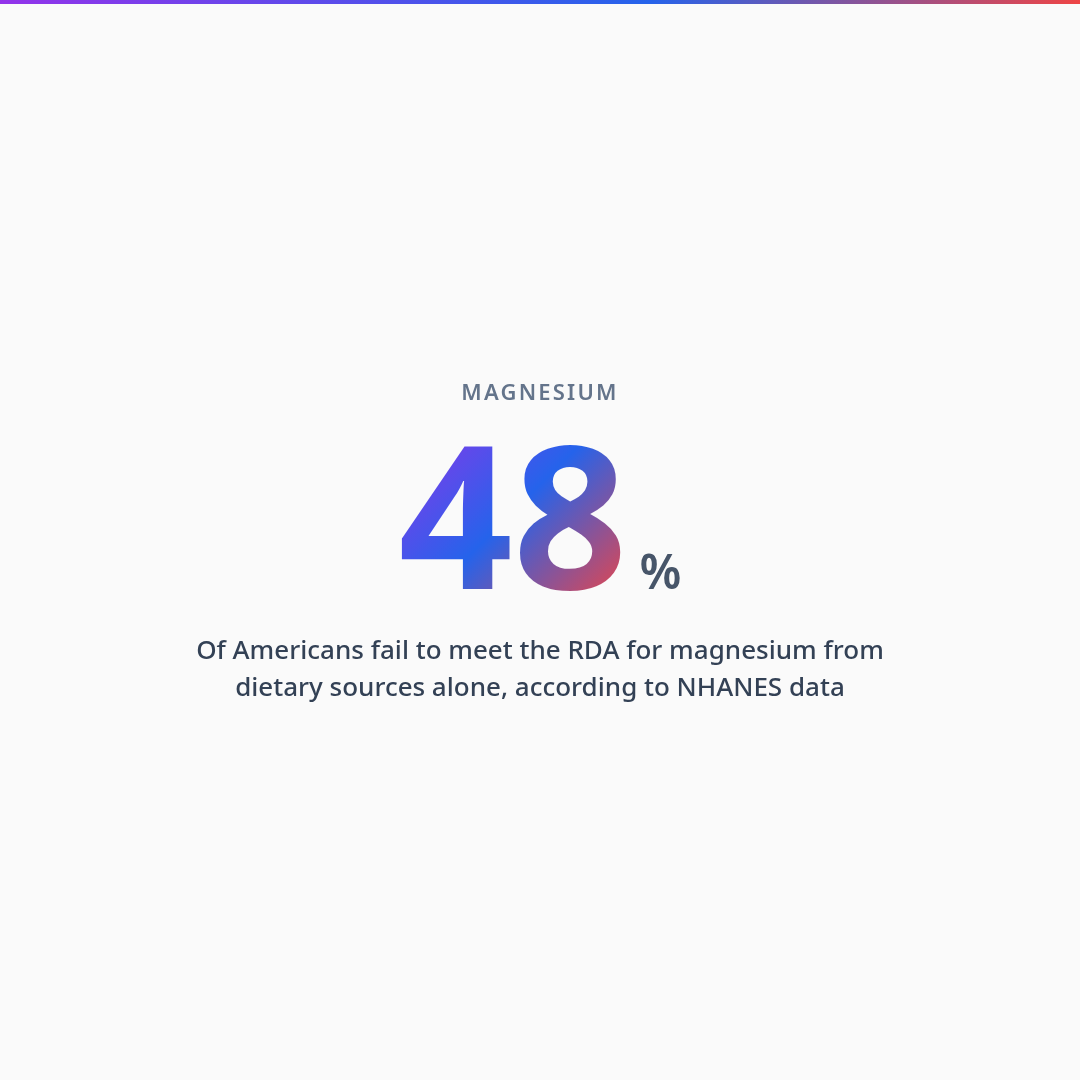
Magnesium is involved in over 300 enzymatic reactions in the human body — yet an estimated 48% of Americans do not meet the recommended daily intake from diet alone. This guide covers everything you need to know before your next purchase: why deficiency is so common and so underdiagnosed, which symptoms point to low magnesium, how to read a serum test result correctly, the dosing evidence for different health goals, and which forms work versus which forms are essentially inert. Consider this the foundational reference for understanding magnesium before you invest in a supplement.
Why Magnesium Deficiency Is So Common
In clinical practice, I noticed that subclinical magnesium deficiency was one of the most consistently overlooked contributors to patient symptoms. Patients with chronic fatigue, poor sleep, muscle cramping, anxiety, headaches, and blood pressure concerns were frequently walking in with magnesium status that had never been properly assessed — and often, addressing the deficiency produced measurable symptomatic improvement.
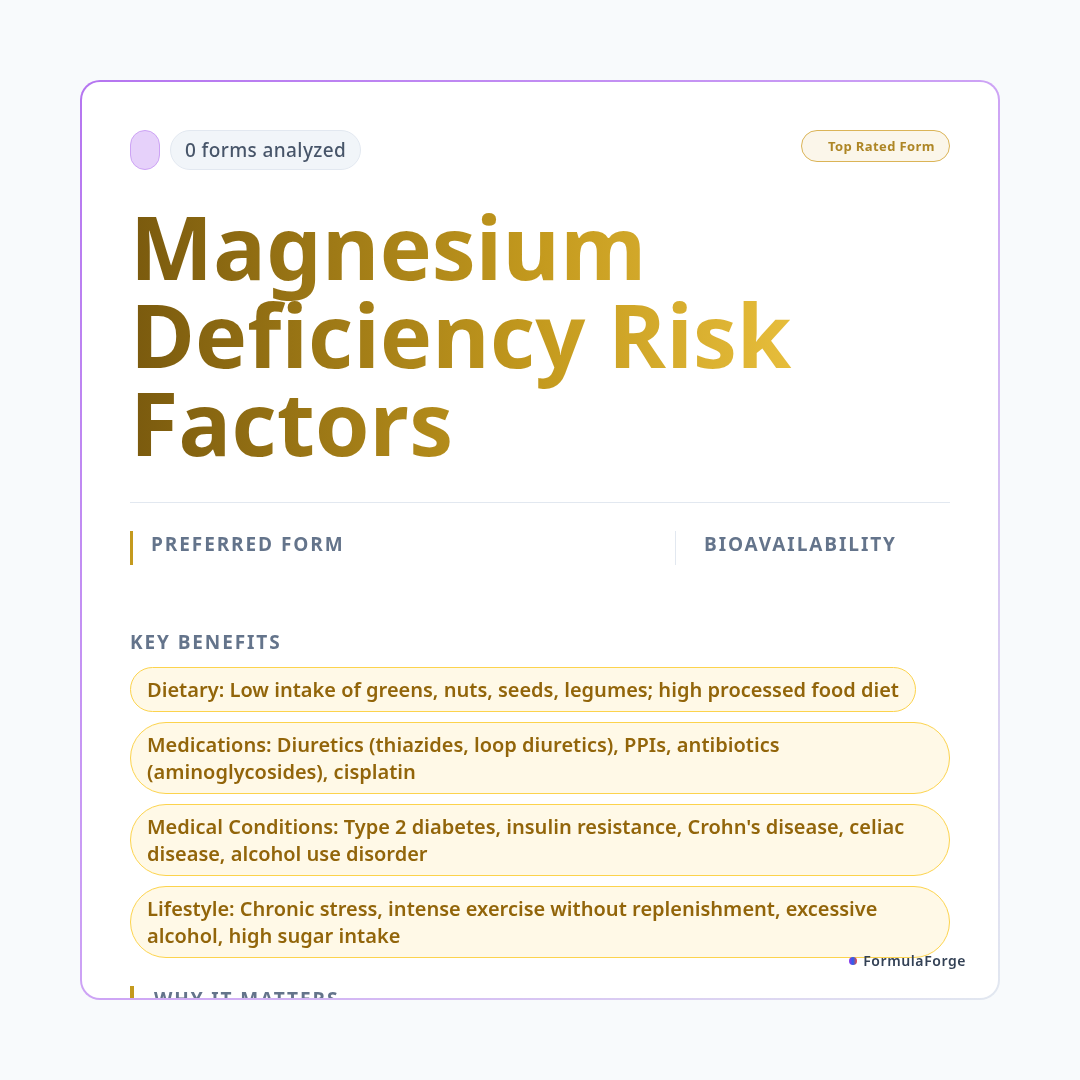
The reasons for widespread deficiency are structural. Modern agricultural practices have depleted magnesium from soil — some estimates suggest up to 80% reduction in leafy greens over the past 50 years compared to mid-20th century measurements. The foods that contain the most magnesium (dark leafy greens, nuts, seeds, whole grains) are also the foods most underrepresented in the typical Western diet. And several common life circumstances actively deplete magnesium: chronic stress (magnesium is consumed by the adrenal cortisol response), alcohol use, diuretic medications, proton pump inhibitors (PPIs), and insulin resistance all accelerate magnesium losses through the kidneys.
Data from the National Health and Nutrition Examination Survey (NHANES 2005–2006) showed that 48% of Americans consumed less than the estimated average requirement (EAR) for magnesium. A 2012 review in Nutrition Reviews estimated that up to two-thirds of Western populations may be in chronic low-grade magnesium deficiency that does not meet the clinical threshold for hypomagnesemia but still produces functional consequences at the cellular level. This is the "subclinical deficiency" problem — below the clinical radar, but above the threshold for physiological impact.
The Serum Magnesium Problem
One of the most important things to understand about magnesium testing is that the standard serum magnesium test is a poor indicator of total body magnesium status. Serum magnesium represents only about 0.3–1% of total body magnesium. The rest is stored in bone (60%), muscle (27%), and soft tissue (~12%). The body tightly regulates serum magnesium by pulling from bone and muscle stores — so a normal serum level does not rule out tissue depletion.
A "normal" serum magnesium result does not mean your magnesium status is optimal. It means your kidneys and bones have successfully maintained serum levels, potentially at the expense of tissue stores. Patients with magnesium deficiency symptoms and normal serum levels are not imagining their symptoms — they may have functional tissue depletion that serum testing cannot detect.
The more accurate assessment is red blood cell (RBC) magnesium, which reflects intracellular magnesium concentration. However, RBC magnesium is not a standard test in most clinical settings and is imperfect in its own ways. The practical clinical approach is to assess based on symptoms, dietary patterns, risk factors, and serum magnesium — and to consider a therapeutic trial of well-absorbed magnesium in patients with consistent symptom profiles even with normal serum levels.
What Magnesium Actually Does
Magnesium is a co-factor for over 300 enzymatic reactions. This is not a number that should roll off the tongue without weight — it means magnesium participates in energy production (ATP synthesis requires magnesium), protein synthesis, DNA repair, nerve conduction, muscle contraction and relaxation, blood pressure regulation, and glucose metabolism. It is not a specialist nutrient. It is a systems nutrient that touches nearly every major physiological pathway.
ATP — adenosine triphosphate, the molecule that powers every cellular function in your body — must be bound to magnesium to be biologically active. When you see "ATP" in biochemistry, the functional form is actually Mg-ATP. This means that without adequate magnesium, your cells cannot efficiently use the energy they produce. This is a core reason why magnesium deficiency presents so often as fatigue — not because magnesium is a stimulant, but because energy utilization itself depends on it.
Symptoms That Point to Low Magnesium
Magnesium deficiency produces a broad symptom profile that is often attributed to other causes. The following symptom clusters warrant a clinical assessment of magnesium status:
Muscle cramps (especially nocturnal leg cramps), eye twitches, generalized twitching or fasciculations, tremors, muscle weakness, and the sensation of tight or tense muscles throughout the day. Magnesium regulates calcium channels in muscle tissue — without adequate magnesium, muscles struggle to fully relax after contraction.
Nocturnal leg cramps in particular are frequently treated with quinine or dismissed as benign, when in many cases they represent straightforward magnesium depletion. In clinical practice, in clinical practice, patients who addressed magnesium status reported improvements in nighttime muscle comfort in a meaningful proportion of patients — often within one to two weeks.
Anxiety, irritability, difficulty concentrating, low stress tolerance, depression, and sleep disturbance. Magnesium modulates the NMDA glutamate receptor — the primary excitatory receptor in the brain. Low magnesium means insufficient blockade of this receptor, contributing to neural hyperexcitability.
A 2017 randomized controlled trial in PLOS ONE found that 248 mg/day of elemental magnesium (as magnesium chloride) was associated with improvements in participant-reported mood outcomes — with effects appearing within two weeks. This is not a cure for clinical depression, but magnesium status should be part of the assessment for any patient presenting with mood or anxiety symptoms.
Elevated blood pressure, palpitations, irregular heartbeat, and poor exercise recovery. Magnesium regulates vascular smooth muscle tone and sodium-potassium ATPase activity, which affects cardiac electrical conduction.
Research has examined the relationship between magnesium intake and cardiovascular health markers. In patients with palpitations or atrial flutter where magnesium status has not been assessed, this is a meaningful oversight. Intravenous magnesium is a standard treatment for torsades de pointes and eclampsia-associated seizures in hospital settings — the cardiovascular relevance is not marginal.
The RDA: What the Numbers Mean
The RDA represents the level sufficient to meet the needs of 97.5% of the healthy population. "Sufficient" here means avoiding clinical deficiency — it is not optimized for therapeutic goals. Some researchers argue that the RDA underestimates actual requirements, particularly for individuals with high stress loads, intense exercise, diabetes, or conditions associated with accelerated magnesium loss.
Food Sources: The Reality Check
Magnesium is found in meaningful amounts in whole foods, but reaching the RDA purely through diet requires deliberate dietary choices that most people do not consistently make.
Meeting the 320–420 mg RDA requires eating multiple servings of magnesium-rich foods daily. This is achievable but not the default for most Western dietary patterns, which emphasize refined grains, meat, dairy, and processed foods — all of which are low in magnesium.
Forms: Matching the Right Magnesium to the Right Goal
Not all magnesium supplements are clinically equivalent. The form — meaning the molecule magnesium is bound to — determines where in the body it goes, how much you absorb, and what side effects you experience. This is a point of persistent confusion in supplement purchasing.
Magnesium oxide is the most commonly sold form of magnesium in drugstores and big-box retailers. It is also one of the least effective for correcting magnesium deficiency. Studies comparing magnesium oxide to organic chelates consistently find 4–5x lower bioavailability. A 500 mg magnesium oxide tablet delivers approximately 20 mg of usable elemental magnesium. The same label would deliver 400 mg of elemental magnesium — but only about 20 mg crosses the intestinal wall and enters circulation. Patients who report that "magnesium doesn't work" have almost always been taking oxide.
Dosing: The Evidence-Based Range
The supplemental tolerable upper limit (UL) for magnesium is 350 mg/day of elemental magnesium — this applies to supplemental forms only and is based on laxative effects as the adverse outcome of concern, not toxicity. Many patients will tolerate more than this without issue, particularly with chelated forms that are less osmotically active in the colon. However, the 350 mg/day threshold is the conservative safety limit for general supplementation without medical supervision.
Magnesium is on the World Health Organization's List of Essential Medicines — not as a supplement, but in intravenous form for critical clinical applications. IV magnesium is the standard of care for eclampsia (pregnancy-related seizures), severe asthma exacerbation unresponsive to bronchodilators, and torsades de pointes arrhythmia. The clinical significance of this mineral in acute medicine is well established. The oral supplementation question is about chronic optimization, not whether magnesium matters — it unambiguously does.
Magnesium and Common Health Conditions
The research connects magnesium status to several conditions that appear frequently in supplement-purchasing populations:
Type 2 Diabetes: A 2013 meta-analysis in Diabetic Medicine reviewed 13 studies with 536,318 participants and found that for each 100 mg/day increase in magnesium intake, the observational research has examined the association between magnesium intake and metabolic health markers. Multiple trials have also demonstrated that research suggests magnesium may support healthy blood sugar metabolism already within normal range. The mechanism involves magnesium's role in insulin receptor signaling and glucose transport.
Migraine Prevention: The American Headache Society lists magnesium as a Level B evidence supplement for migraine prevention. A 2021 meta-analysis in Nutrients reviewed 21 trials and found that magnesium supplementation significantly reduced migraine frequency. The proposed mechanism involves magnesium's role in blocking NMDA receptors and regulating serotonin and nitric oxide — both implicated in migraine pathophysiology. Doses of 400–600 mg/day for 3 or more months showed the most consistent effects.
PMS Symptom Reduction: A 2010 systematic review found that some research suggests magnesium may support comfort during the normal menstrual cycle. The magnesium-B6 combination showed additive benefit in several trials. For women with cyclical mood changes, bloating, or cramping in the luteal phase, magnesium represents one of the better-evidenced nutritional interventions.
Absorption: What Reduces It
Even with a well-chosen form, certain factors reduce magnesium absorption that are worth knowing:
Magnesium is one of the most common findings in supplement stack analysis at myformulaforge.com. Patients frequently have magnesium oxide in their current stack — often in a multivitamin — when the evidence clearly supports chelated forms for clinical benefit. The FormulaForge analysis identifies the specific magnesium form in your current supplement, cross-references the dose against your stated health goals, and flags the form mismatch if it exists. If you are spending money on magnesium and it is not working, the form is almost always the reason.
The tolerable upper intake level for supplemental magnesium is 350 mg/day for adults. This limit is based on laxative effects (diarrhea, cramping), not systemic toxicity. Individuals with kidney disease should not supplement magnesium without medical supervision — impaired kidney function reduces the ability to excrete excess magnesium, creating hypermagnesemia risk. Magnesium supplements can interact with certain antibiotics (fluoroquinolones, tetracyclines), bisphosphonates, and diuretics — consult your healthcare provider if you take any of these medications.
Frequently Asked Questions
Magnesium is a systems-level nutrient with legitimate clinical evidence for sleep, anxiety, migraine prevention, blood pressure, insulin sensitivity, and muscle function. Nearly half of Americans do not meet the dietary RDA. Serum testing is unreliable for detecting subclinical depletion. Magnesium oxide — the form in most drugstore products — has approximately 4% bioavailability and is not a therapeutic supplement. Chelated forms (glycinate for sleep and anxiety, malate for energy, threonate for cognitive health) are what the evidence supports. If you are buying magnesium, the form is the decision — everything else is secondary.
This article is intended for educational and informational purposes only and does not constitute medical advice. The information provided here is not a substitute for professional medical advice, diagnosis, or treatment. Always seek the guidance of your physician or other qualified health provider with any questions you may have regarding a medical condition or supplement regimen. These statements have not been evaluated by the Food and Drug Administration. Dietary supplements are not intended to diagnose, treat, cure, or prevent any disease.
- Rosanoff A, et al. Suboptimal magnesium status in the United States: are the health consequences underestimated? Nutr Rev. 2012;70(3):153–164.
- Blumberg JB, et al. Contribution of dietary supplements to nutritional adequacy by socioeconomic subgroups in adults of the United States. Nutrients. 2017;9(12):1325.
- Abbasi B, et al. The effect of magnesium supplementation on primary insomnia in elderly. J Res Med Sci. 2012;17(12):1161–1169.
- Tarleton EK, et al. Role of magnesium supplementation in the treatment of depression: A randomized clinical trial. PLOS ONE. 2017;12(6):e0180067.
- Veronese N, et al. Magnesium and health outcomes. Adv Nutr. 2021;12(2):382–401.
- Mathers TW, Beckstrand RL. Oral magnesium supplementation in adults with coronary heart disease or coronary heart disease risk. J Am Acad Nurse Pract. 2009;21(12):651–657.
- Sarris J, et al. Adjunctive nutraceuticals with standard pharmacotherapies in bipolar disorder. Bipolar Disord. 2011;13(5–6):454–463.



Related Research
- ResearchMagnesium Bisglycinate Chelate (TRAACS®) — Forms, Dosing & Research(1 form)
- ResearchIonic Plant-Based Trace Minerals — Forms, Dosing & Research(1 form)
- ResearchMagnesium Caprylate Dihydrate — Forms, Dosing & Research(1 form)
- ResearchBHB Mineral Salts (generic) — Forms, Dosing & Research(1 form)